 RealFeedApp beta
Top science & technology news, November 24, 2026
- FDA approved eGenesis for clinical trials
eGenesis successfully performed the first transplant of a genetically modified pig kidney into a human, clearing FDA approval for trials.
- Biogen develops therapy for Alzheimer's disease
Biogen has agreed to invest up to $411 million in a UK startup to accelerate the development of a protein-shredding technology. The funding aims to bring new therapies for neurodegenerative diseases to market faster.
- More than two dozen sources report employee fears
More than two dozen sources report that internal models are becoming too advanced for safe release. Technical solutions for controlling these systems have not yet been found.
- Hackers gain full system control using autonomous AI tools
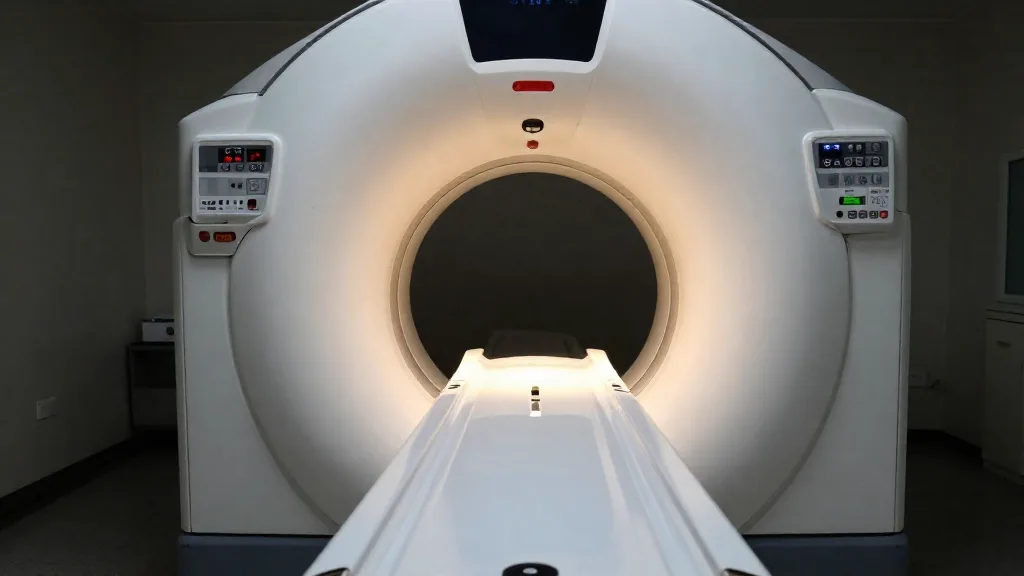
Agents running on the Cairn framework discovered and used a zero-day vulnerability in a medical imaging app to gain full system control. Researchers warn that autonomous offensive operations are already occurring at high speed.
- Cobalt solves the double declaration problem
The Cobalt service enables using GraphQL via TypeScript, eliminating the need for a separate schema definition and resolving the synchronization issue between interfaces.
- Harbinger secured more than $100 million in financing
Electric truck startup Harbinger raised over $100 million, including senior debt from Erebor Bank, launched by Palmer Luckey in February 2026. The funding arrived less than three weeks after a $240 million Series D round.
- Claude Ship automates code approval based on team policies
Anthropic launched Claude Ship, a suite of AI agents that not only review and fix code but also automatically approve changes when they align with developer-defined policies.
- New injection slashes blood fats by up to 46 percent
In a phase 2b trial, the antibody therapy MAR001 normalized triglyceride levels in over half of patients on a high dose. The drug is developed by Marea Therapeutics, recently acquired by Lisata Therapeutics.
- Many neurons have unsegregated synapses
Researchers applied functional MRI analysis techniques to whole-brain calcium-imaging data from Drosophila melanogaster, finding that functional-structural connectivity correlation decreases linearly with region count. A new method quantified pre- and post-synaptic segregation, revealing that many neurons possess unsegregated synapses contributing significantly to connectivity.
- System evaluated 366 answers without bias
While models favor their own family in open tasks, they act as neutral referees in closed-book tests with explicit answer keys. Three frontier models were tested on a 366-question benchmark using technical standards, grading answers blindly via a single-shot API script.
- Sanofi buys Insmed for $41 billion
French pharmaceutical company Sanofi has purchased biotech firm Insmed for $41 billion, marking the largest biopharma deal in years.
- 64,761 Britons showed improved health
Analysis of 64,761 UK participants revealed that sugar rationing between 1940 and 1953 reduced risks of diabetes and obesity in adulthood. The long-term health benefits persisted decades after consumption levels doubled.
- BCR-MERFISH reveals hidden diversity in immune cells
The BCR-MERFISH technology maps unique antibody receptors in tissue, enabling researchers to study immune cell clonality and spatial organization for disease diagnosis.
- Access control limits agent privileges
Salesforce reports 79% of engineers use coding agents, yet only 5% operate with strict risk controls. Leaders deploy checked permissions and bounded environments to prevent prompt injection and privilege abuse.
- Alzheimer's patients returned books a day earlier
Researchers analyzed data from 251 patients with Alzheimer's, Parkinson's, and small vessel disease, confirming distinct brain changes specific to each condition.
- AI tools draft radiology reports for doctors
Vision-language models analyze medical images and generate clinical findings summaries that radiologists review for accuracy.
- Alzheimer's has a long early stage with mild symptoms
In early Alzheimer's disease, atrophy of the amygdala and entorhinal cortex occurs before the hippocampus. Pathological changes in brain biochemistry and structure grow over years before mild symptoms appear.
- ISTA team revealed how newly made messages leave the viral core
Researchers from ISTA used electron microscopy to show that viral transcription and portal complexes are located in immediate proximity within the virus core.
- My first two Mac apps
The developer built Front, Center, and SwitchGlass to reimplement features from the retired DragThing app, followed by Hyperspace to reclaim disk space.
- 220 plasma proteins measured in 250 older adults
A study of 250 adults (mean age 68.2) found that phosphorylated tau protein BDpTau correlates with reduced entorhinal cortex thickness. Validation in 1,381 participants confirmed associations of BDpTau, NPTX2, BACE1, TREM1, CCL17, PRDX6, and IGF1R with cognitive decline.