 RealFeedApp beta
Top science & technology news, November 19, 2026
- One participant reached 15 months of disease control
In a University of Minnesota Phase I trial, an experimental genetically engineered adenovirus controlled disease for 15 months in one participant with inoperable pancreatic cancer.
- Qwen edits 0.016% of weights in layers 15 and 19
The Qwen model stopped looping and finished answers after editing 131,072 weights. The technique targets specific failure cases rather than broad benchmarks.
- FlyDSL MonoKernels reduce GPU-side costs in vLLM decode
FlyDSL MonoKernels eliminate GPU dispatch overhead in vLLM, enabling continuous kernel execution for interactive LLM agents. This optimization is essential for maintaining low latency with small batch sizes.
- A single set of reagents functions across highly divergent species
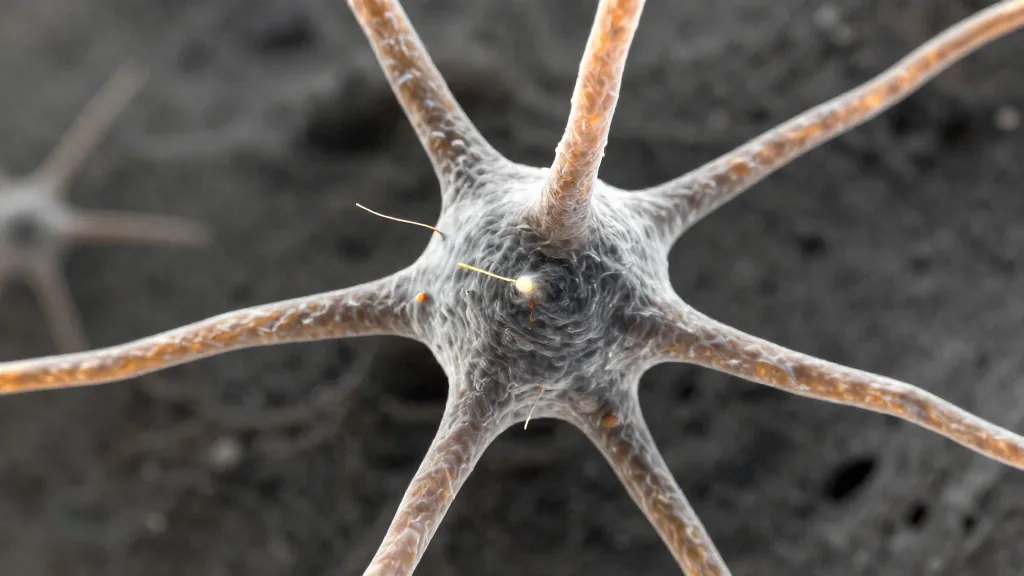
Researchers developed universal barcoded reagents enabling rapid single-neuron tracing in frogs, birds, and non-human primates. The method overcomes viral tropism barriers, allowing high-throughput connectivity mapping across highly divergent vertebrates with one set of tools.
- Blobasaur handles thousands of operations per second
Kite replaced CouchDB with Blobasaur, a distributed SQLite-based server for storing user preferences. The system handles thousands of read/write operations per second on commodity hardware with single-digit millisecond latency.
- Mutation impact can be opposite in different cell types
Researchers from the Wellcome Sanger Institute and Open Targets used CRISPR to edit genes in microglia-like cells, demonstrating that a single gene's effect can be opposite depending on the specific cell type and environment.
- C2N Diagnostics turns Alzheimer's diagnosis into a minimally invasive procedure
C2N Diagnostics' PrecivityAD and PrecivityAD2 tests detect amyloid and tau biomarkers. Japanese regulators approved these blood-based methods for early Alzheimer's diagnosis.
- RKI metrics reveal two distinct white matter phenotypes
A study of 305 adults found that one phenotype involves axonal degeneration without myelin loss, while the other involves demyelination, both linked to disease progression.
- AMD NPU loads converted Q4NX models
The Unsloth library update enables running Q4NX models on AMD NPU and training LTX-2.5 and MOSS-Image LoRA 42% faster.
- Gata2-dependent uterine hypoplasia and vaginal atresia occur
Deletion of mesenchymal Gata2 causes selective regression of cranial Müllerian ducts without ectopic AMH signaling. The study identifies NRG1 signaling as a critical mechanism for duct maintenance.
- FDA approves first drug for neurological symptoms of Type 3 Gaucher disease
The FDA approved Infilbray (venglustat) for adults and pediatric patients weighing at least 15 kg. The drug crosses the blood-brain barrier to reduce harmful substance accumulation in the brain.
- WHIM method aligns fiber orientations voxel-wise
Researchers combined MMORF and WHIM methods with non-negative matrix factorization to create compatible sparse tractography matrices for precise alignment across individuals.
- Original data on black holes and quantum gravity
Claude completed a calculation physicists set up over 20 years ago and found the exact limit of a technique used to test candidate theories of quantum gravity.
- Investors priced Anthropic shares at $83
Anthropic priced its IPO at $83 per share, exceeding the projected range of $70 to $78. The company is valued at $1.5 trillion, below the $2 trillion target but reflecting strong investor appetite.
- Hypothalamus volume and gene activity change early in Alzheimer's disease
Researchers at the Buck Institute found specific age-related changes in hypothalamic volume and gene activity occur early in Alzheimer's disease. They released the HypoAD atlas, combining brain imaging and single-nucleus RNA sequencing to map these changes.
- Programmable synthetic magnetic fields steer charged particles
Researchers simulated the Harper--Hofstadter model on a 49-qubit superconducting processor to demonstrate how magnetic field reversals alter particle trajectories.
- Average modeled execution time reduced by 66%
Researchers presented a framework for designing quantum processors on ions, where a Lean-verified compiler guarantees code correctness for any device. An AI agent using the compiler's verified results identified an optimal configuration, reducing average modeled execution time by 66% compared to the worst-performing designs among 75 benchmarks.
- DNA methylation defines cellular identity
The COMET framework leverages cell-type-specific methylation patterns to classify individual long reads into cell types, enabling robust analysis of cell composition from standard bulk long-read data.
- System measures head growth parameters with R2 of 0.98
Researchers developed an in vitro platform to accurately replicate the biomechanics of intracranial expansion in infants aged 3 to 6 months. The system uses 3D-printed bone models and flexible latex sutures to measure cranial growth.
- Models respond to simple factual queries about climate change
Researchers from University College London and UNESCO found that large language models provide precise climate data, though accuracy drops with complex or specific queries.