 RealFeedApp beta
Top science & technology news, November 16, 2026
- Four independent assessors received access to internal models
The company signed agreements with four independent experts for deep access to internal models and systems.
- Johnson & Johnson invests $3.3 billion in eye drug OLN324
J&J will pay $2.2 billion upfront plus $1.1 billion in milestones to acquire Ollin Biosciences. Blackstone Life Sciences will contribute $750 million to support Phase 3 trials of OLN324.
- AI appears in 51.6% of November 2026 postings, up from 30% two years ago
As of November 14, 2026, there were 244 job postings on Hacker News, a 37% decrease from the previous year. AI is mentioned in 51.6% of all postings, the highest share since June 2026.
- Agents boosted efficiency on 21 long-horizon tasks
The new FrontierML benchmark demonstrates that frontier AI systems can autonomously allocate funds to enhance performance across 21 complex tasks.
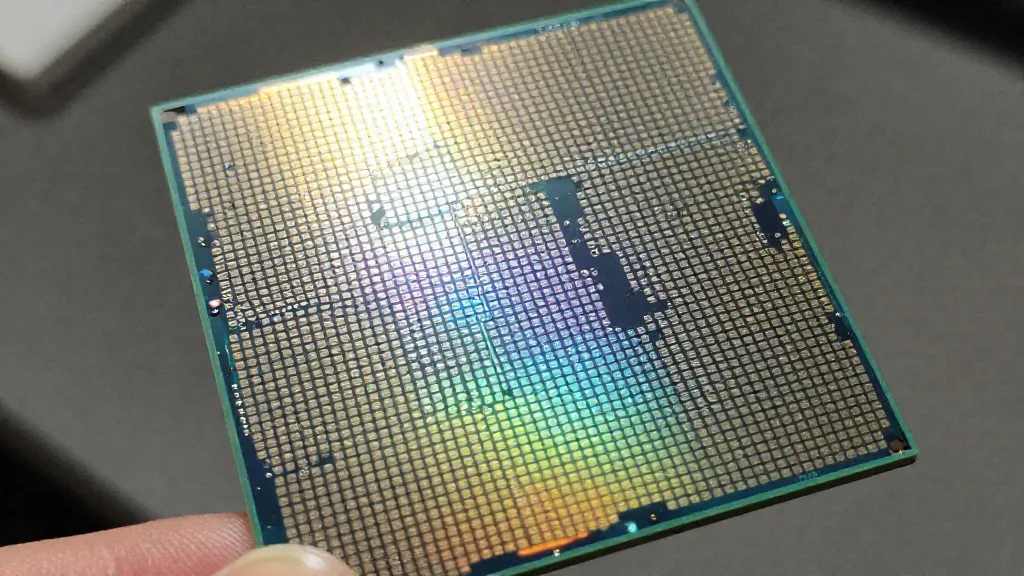
- New Intel GPU D270 runs air-cooled at 350W
Video compares the performance of Intel GPU D270 and NVIDIA RTX PRO 6000 when running the Qwen3-30B-A3B model with vLLM.
- Superb-seq reveals unwanted CRISPR edits
Scientists from the Salk Institute introduced Superb-seq, a single-cell method that detects both intended and unintended edits from CRISPR/Cas9. The tool allows researchers to assess how these genetic modifications alter gene activity at the cellular level.
- Study compares MXFP8 and 6-bit MXFP6 for R&R inference
Empirical evaluation on AMD MI350X architecture demonstrates that native MXFP6 GEMMs achieve significant speedups while maintaining model quality within a 0.01% Normalized Entropy margin, overcoming the strict precision constraints typical of production-grade Recommendation and Ranking systems.
- LLM-as-a-judge ignores UI importance
Researchers propose replacing LLM judges with agents that directly control the search UI to solve the disconnect between ranking metrics and A/B test success.
- Seawolf Therapeutics raised $100 million
Seawolf Therapeutics received $100 million to support its research into DNA-based therapies. The deal includes partners like Versant Ventures, Eli Lilly, CRISPR Therapeutics, and Sanofi, which could pay up to $1.2 billion in milestone payments.
- Dreamteam raised $53 million
Dreamteam, founded by former Freshworks executives, secured seed and Series A funding from Together Fund and Accel to automate customer management with AI agents.
- Kimchi contains bacterium binding 57 percent of nanoplastics
Researchers from South Korea demonstrated that Leuconostoc mesenteroides CBA3656 captures 87% of polystyrene nanoparticles in water and 57% in a simulated intestine. Experiments on germ-free mice confirmed plastic excretion via feces, though human trials are pending.
- Formal operation specifications make system management predictable
The authors advocate including formal operations specifications (FOS) in standard system interfaces to enable systematic verification of management-plane software and AI agents.
- Genomic analysis of 84 F. poae isolates reveals population structure
Analysis of 84 isolates reveals a two-part genome structure: a gene-dense core and an accessory region rich in repeats. This organization shapes evolution in this cereal pathogen.
- Eleanor covers biological mechanisms of aging
Researchers link cognitive processing speed to Alzheimer's risk and are investigating biological mechanisms that could slow down brain aging.
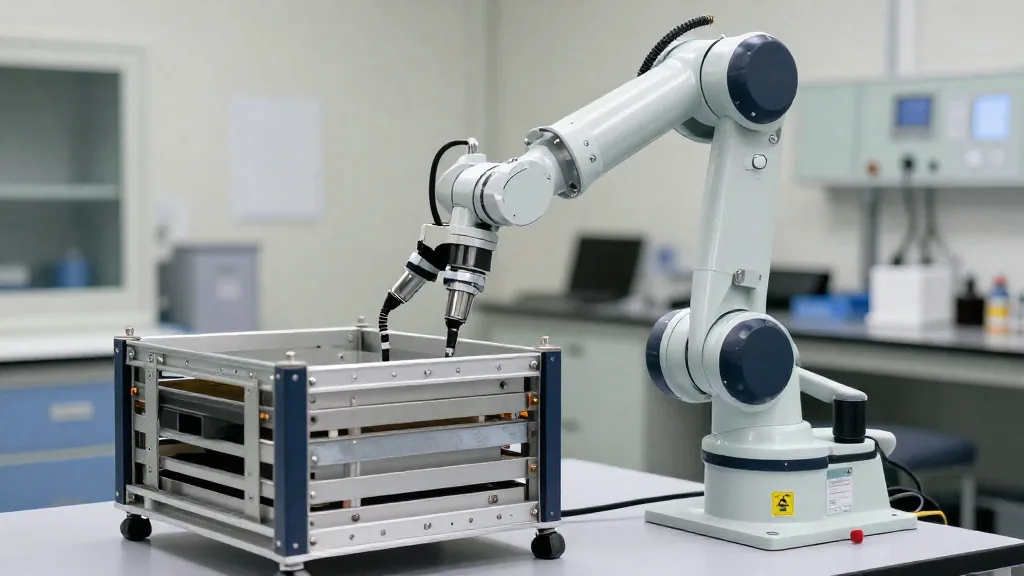
- Surgeon Dave Bell operates with robot Remedy N1
The Remedy N1 system, controlled via an Xbox controller, enables a surgeon to remotely perform thrombectomies using a flexible catheter. Currently tested on silicone simulators, the device is designed for emergency stroke operations.
- SFQ electronics framework reduces qubit leakage
A new framework using Single Flux Quantum digital electronics reduces coherent control infidelities to below 10⁻⁴ for transmon qubits. Genetic-algorithm optimization of DRAG-inspired pulse sequences eliminates leakage from the computational subspace in a scalable cryogenic architecture.
- AscendGYM tested 48 kernels across three difficulty levels
Researchers introduced AscendGYM, a suite of 48 kernels designed to evaluate kernel optimization on Ascend NPUs. The benchmark utilizes real-world tensor shapes and data types from training and inference tasks to measure performance improvements for both trained models and custom agents.
- Cells accumulate excess GNA without NGLY1
Using patient-derived stem cells, researchers found that lacking the NGLY1 protein causes glycan accumulation and altered morphology in human microglia. This model clarifies how NGLY1 deficiency affects brain-resident immune cells.
- Minipigs with the Huntington's disease transgene live more than a decade
Researchers compared putamen tissue from transgenic and wild-type minipigs at 4 and 8 years using RNA sequencing and proteomics. At 8 years, 3324 proteins were differentially expressed, confirming concordant transcriptome and proteome pathway changes in the Huntington's disease model.
- GLIDRE shows DSB repair is faster in open chromatin regions
Researchers developed the GLIDRE platform to visualize DNA double-strand break repair dynamics in living cells. The study found that repair is significantly faster in open chromatin regions compared to compacted ones, regardless of transcriptional activity.