 RealFeedApp beta
Top science & technology news, October 29, 2026
- Zilganersen (Zanvastro) reduces GFAP production in trials
The US FDA approved zilganersen (Zanvastro), the first treatment targeting the GFAP gene mutation causing Alexander disease. Clinical trials demonstrated a positive effect on key disease characteristics.
- Mistral Large 4 (Le Chonk) offers three reasoning modes
The 1-trillion parameter model is available for self-hosted deployment with three reasoning modes to balance cost and performance.
- The Danionella cerebrum atlas profiles more than 600,000 cells
Whitehead Institute team profiled over 600,000 cells from Danionella cerebrum to establish a molecular reference for studying brain regeneration and cellular diversity.
- Learning resembles reinforcement learning
Research concludes that large language models, relying on reinforcement learning and self-supervised learning, lack consciousness because their behavior is algorithmically determined rather than biologically driven.
- 2170 people and 31 models scored 32 statements
31 models agreed on 32 quiz questions better than 2,170 humans, despite being built by 11 different organizations.
- AAV gene therapies solve drug delivery problems
The industry is shifting focus from clinical efficacy to manufacturing capacity and supply chain reliability as demand outgrows traditional development approaches.
- Mintive raised $11 million total
Agent-management startup Mintive secured a $7 million seed round led by Cowboy Ventures, with additional backing from Coatue and angel investors Jeff Dean and Andrej Karpathy. Founders Jiquan Ngiam and Vijay Vasudevan previously worked on neural networks at Google Brain and co-created TensorFlow.
- Engineers and AI agents test firmware without hardware now
Simantic (YC F26) has built a simulation layer allowing engineers and AI agents to validate firmware without physical hardware. Founders, former engineers at Neuralink and Tesla, note that while large language models automated software development, testing firmware previously required expensive physical boards.
- Genmab shares hit all-time high after successful late-stage trial
Combining Genmab's drug petosemtamab with Keytruda cut death risk by half compared to Keytruda alone. The company's market value grew by more than $7 billion, exceeding $35 billion.
- 45 adults remembered having an imaginary companion
A study of 185 adults in Türkiye found that 45% remembered having an imaginary companion. Those who recalled such friends reported a stronger sense of someone being nearby, even when alone.
- Researchers scanned the brains of 2,000 people in the Netherlands in 2007
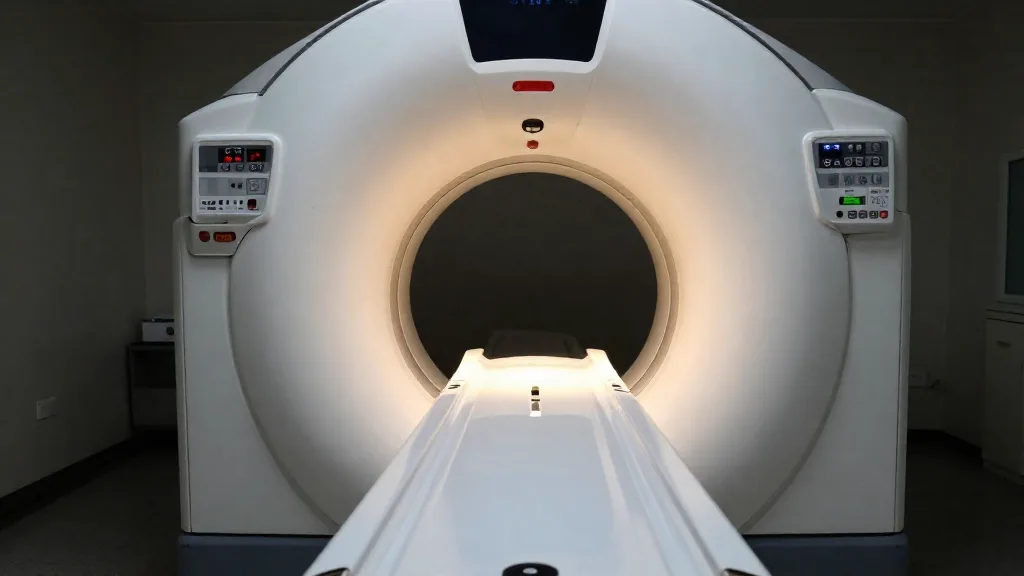
A 2007 study of 2,000 Dutch adults found signs of stroke in 7% of participants, yet only 2 reported linked symptoms like hearing loss. This highlights that MRI images alone cannot diagnose the cause of illness without clinical interpretation.
- Biograph released results on 22 October
A Biograph study found that 47% of asymptomatic adults with no detectable plaque still showed elevated inflammation around their coronary arteries.
- Ez-PAVE <55 mg/dL group had 33% lower CV events
A randomized controlled trial found that a target LDL level of <55 mg/dL resulted in a 33% lower rate of cardiovascular events compared to <70 mg/dL. Only 61% of the intensive group achieved the 55 mg/dL target.
- Longevity biotech market to exceed $31 billion by 2030
The market is projected to exceed $31 billion in 2030 with an 8% compound annual growth rate. North America is forecast to be the largest regional market at approximately $12 billion.
- Eugenia Kuyda pivots startup to AI agents
Founded by Eugenia Kuyda, Wabi raised $55 million at a $1.25 billion valuation after pivoting to act as a personal AI agent that constructs mini apps for tasks like meal planning and fitness tracking.
- Mistral Large 4 trained from scratch on 3,800 NVIDIA Grace Blackwell GPUs in Europe
The new Mistral Large 4 model employs a Mixture-of-Experts architecture with 128 routed experts and was trained on 3,800 NVIDIA Grace Blackwell GPUs. It supports over 160 languages and integrates instruction following, reasoning, coding, and agentic workflows into a single set of weights.
- Eric So noticed a breakdown in his own thinking
Eric So from MIT describes how artificial intelligence began hindering his routine tasks and distorting his mind before he realized the issue.
- Federal court rejects new 'medical frailty' definition
A federal judge ruled that the government's new definition of 'medical frailty' was too restrictive and that states lacked sufficient time to overhaul eligibility systems. Judge Richard D. Stearns issued a permanent injunction to prevent disenrollment of eligible individuals.
- Stimulating the forehead reduces bias against women
A study found that perceiving people as bodies rather than whole persons is not hard-wired and can be altered by applying a mild electrical current to the forehead.
- New startup Etcelera Therapeutics formed
Etcelera Therapeutics was formed from Etiome, Cellarity, and Empress Therapeutics under the leadership of Adrian Rawcliffe. Integrating their technologies with Flagship's AI aims to identify novel disease drivers and small molecule medicines.