 RealFeedApp beta
Top science & technology news, October 24, 2026
- Retroviral DNA increased human brain size threefold
A retroviral infection inserted viral DNA into the genome of early chimpanzees seven million years ago, regulating genes that drive brain development. Although humans and chimpanzees share 98.8 percent of the same genes, these viral insertions account for the human brain being three times bigger and more complex than that of its closest evolutionary ancestor.
- ThinkRail opens a repo as a project
ThinkRail from JetBrains integrates agents with the IDE by using intent specifications stored in graphs that agents read to operate across Monaco tabs and terminals.
- Red-teaming exposed weaknesses in model safety boundaries
The company is testing frontier models under adversarial conditions to expose weaknesses before broader release.
- Brain functional connectivity changes in Ndufs4 KO mice before symptoms
Researchers identified abnormal functional connectivity patterns in the brains of Ndufs4 knockout mice prior to clinical manifestation. These pre-symptomatic markers suggest functional disruption precedes visible brain lesions in this mitochondrial disease model.
- Population harmonics impact the accuracy of downstream functional analyses
Using data from 875 participants, researchers found that population-derived connectome harmonics predict individual functional organization more accurately than structural details. Accuracy improved with larger sample sizes but varied by data type.
- OpenAI cuts off internet for frontier model training
OpenAI announced training frontier AI models without internet access to prevent security risks and protect infrastructure from rogue AI incidents.
- Comparison of TS-Portable and Python implementation on 100 scans
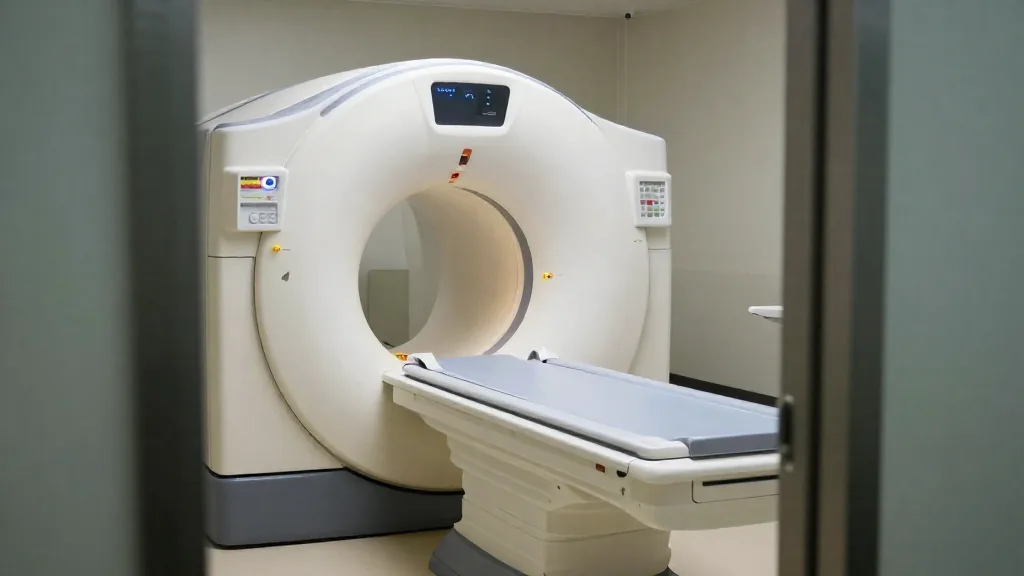
The study found TS-Portable to be noninferior to the reference implementation across 15 abdominal organs while accelerating processing on 100 external CT scans. TS-Portable operates as a standalone executable without Python dependencies.
- Model predicted abstinence from binge drinking by age 16–17
A machine learning model trained on structural and diffusion MRI data from two cohorts identified top-10 features predicting binge drinking by age 16-17. Targeted maximum likelihood estimation confirmed the causal role of these features.
- HMM model limits transitions for segmentation
Researchers developed a k-segment constrained hidden Markov model to robustly infer loss of heterozygosity in sparse single-cell whole-genome sequencing data.
- Kimi Code costs $1.37 for 5 hours of usage
A user spent $19 testing K3.1 Pro Standard and exhausted the 5-hour quota in minutes, processing 1.59M tokens. This represents less than 5% of the usable capacity offered by Claude Code on a $20 subscription.
- Context optimization cuts costs for agents without requiring code changes
Induction AI implements a mechanism that artificially clears request caches during benchmarks to accurately measure inference costs without distortion. This allows agents to perform tasks with the same accuracy while reducing overall computation expenses.
- Dessa is trained fully on human speech without text in the pipeline
Dorsey launched Dessa, a locally trained full-duplex model capable of simultaneous speech and listening, powered by a single NVIDIA GPU and human speech data.
- Study reveals bias in Grok and GPT models
A Convovo study found Grok 4.7 recommended the Republican candidate in 92% of answers, while GPT-6.1 picked the Democrat in 97%. The models agreed on less than 10% of nearly 500 races.
- Laurentide ice reached minimum size 3,600 years ago
A study reveals the Laurentide Ice Sheet reached its minimum size around 3,600 years ago and began re-expanding roughly 2,000 years ago. Human-induced warming around 1960 reversed this expansion.
- Yorba welcomes its first researchers
Platforms view transparency as a risk, yet independent research can deliver novel customer insights. Yorba has opened its data to the first researchers.
- ONT-LibQC reveals biological signal in CUT&RUN with 3 000 reads
ONT-LibQC workflow assesses chromatin assay libraries using approximately 3000 shallow Oxford Nanopore reads before deep sequencing. It successfully identifies enrichment of H3K4me3, H3K36me3, and H3K27me3 profiles, matching results from Illumina sequencing.
- Cloud stretched over 1,000 miles near Mars volcano
Researchers successfully modeled the Arsia Mons Elongated Cloud, revealing a physical process previously unseen in planetary atmospheres.
- Speed limits on Starshield caused two deaths and 17 injuries
Starshield satellites used by the Ukrainian military were restricted by speed limits, causing interceptor systems to fail and resulting in two deaths.
- Surface reservoirs hold only 15 months of water
Researchers from Virginia Tech and Indiana University Bloomington reveal that groundwater supplies in the Colorado River Basin are rapidly declining, threatening the ~40 million people who rely on these hidden water sources.
- UK invests $134 million into AI Biosecurity Lab
The UK government and major AI companies will fund the independent lab to detect biological threats and accelerate vaccine development.