 RealFeedApp beta
Top science & technology news, October 3, 2026
- Apron verifies GPU bootability before renting hardware
The Apron tool calculated model memory from configuration with 2% accuracy on 11 of 14 tested models, eliminating the need to rent GPUs.
- GNOME developers cannot write secure code in C or C++
GNOME developers admit writing secure code in unsafe languages like C is impossible and rely on LLMs to find vulnerabilities.
- Broad Institute and MIT study published in Cell
A new study reveals that wild-type HER3 forms unexpectedly stable homodimers, while cancer mutations disrupt this stability. Researchers used a rare-earth-doped nanoprobe that resists photobleaching to track these protein dynamics over time.
- Qwen omits events from 1989 and 2019
Israeli startup Hirundo found that the Alibaba model Qwen suppresses information about 2019 Hong Kong and 1989 Tiananmen Square events, labels Falun Gong a dangerous cult, and ignores Winnie the Pooh due to comparisons with President Xi Jinping.
- The Zig release includes 925 commits
The release covers 5 months of work by 206 contributors across 925 commits. The Build System was reworked with the introduction of the Build Server Protocol, and the ELF Linker was enhanced to support incremental compilation on x86_64-linux.
- Agents now work like ordinary people via text messages
Services like Caddy integrate into iMessage and RCS, enabling task execution without installing separate applications.
- The model shows results before starting the code
The Opus 5.5 model in Claude handles multi-step tasks longer and more accurately than previous versions when a clear completion criterion is set. It autonomously manages the workflow without requiring constant user intervention.
- Robinson worked three and a half years at OpenAI
David Robinson, a long-tenured employee who helped write safety reports for major product launches, resigned in an Atlantic essay, stating the company's culture is broken and echoing concerns about AI safety risks.
- Algorithm assessed risk of upper urinary tract deterioration
Researchers adapted three machine learning models to analyze videourodynamics data from patients with spina bifida. The models successfully predicted the risk of hydronephrosis and classified bladder dysfunction severity.
- Someone targeted me to run arbitrary code on my laptop
Security researchers demonstrated how attackers use scripts in git post-checkout hooks to execute arbitrary code on a client device. In the described case, this led to an attempt to access GitHub and REVSYS accounts.
- Apple updates macOS settings to prevent apps from misusing privacy features
Apple updated macOS privacy settings to block third-party apps and AI agents from accessing message histories without explicit user permission.
- Silencing specific brain cells stops fear response in mice
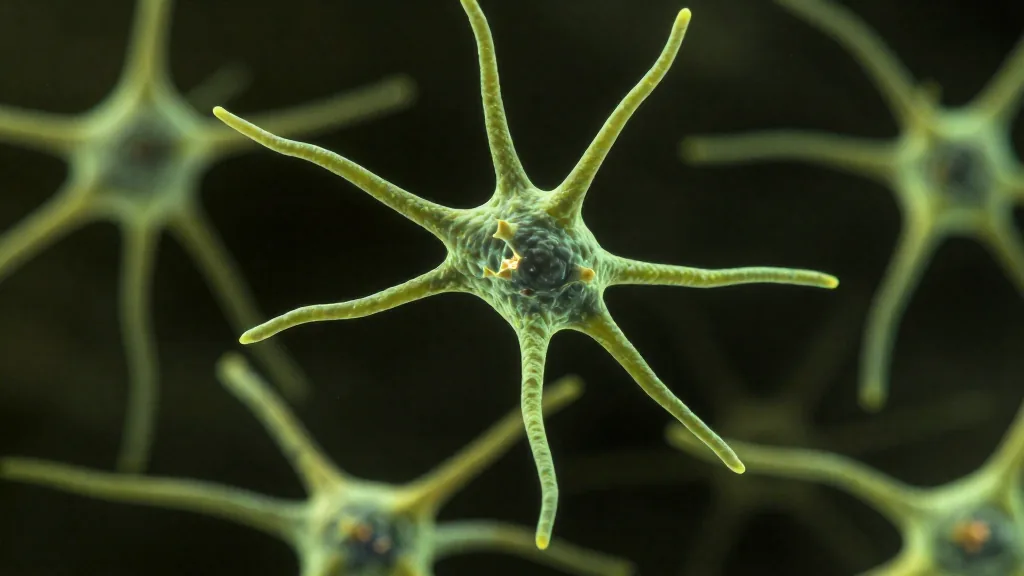
Northwestern scientists identified specific neurons activated by cannabinoids, including THC, that drive anxious behaviors in mice, particularly under stress. Silencing these neurons eliminated the drug-induced anxiety response.
- Kudu hunted on Lake Eyasi
Research shows that in Hadza and Tsimane societies, meat is redistributed, leaving families with only half the catch.
- Karpathy built a GPT from an empty file
In May 2026, Karpathy joined Anthropic to work on pre-training research. Previously, he led the computer vision team at Tesla and founded Eureka Labs in July 2024.
- llamafile speeds up prompt evaluation by 30% to 500%
New matrix multiplication kernels for llamafile deliver 30% to 500% faster prompt evaluation on CPUs, achieving 2x speed compared to MKL for matrices fitting in L2 cache.
- Platform analyzes how language shapes benefits from AI
Research demonstrates that language models exhibit different behaviors based on query language, impacting information access and tool availability across nations.
- New restrictions on Full Disk Access in macOS
New APIs empower developers while requiring explicit user consent for full system access. These measures are essential to protect user data and communication privacy as autonomous AI agents become more capable.
- MicroVMs in Docker Desktop
Docker employs Mirage Unikernel libraries to build an embedded VMM since 2015, offering a secure and fast alternative to traditional containers.
- Build your own OS as a library with FTL
The FTL operating system functions as a shared library implementing core OS concepts like processes and TCP/IP, providing hypervisor-like isolation without requiring bare-metal machines.
- Neko Health has a global waitlist topping 300,000 people
Neko Health, co-founded by Spotify's David Ek and Hjalmar Nilsonne, launched a one-hour body scan for $500 in New York. The service has a global waitlist exceeding 300,000 people.