 RealFeedApp beta
Top science & technology news, August 4, 2026
- Preventing Misfolding by Preventing Folding
Researchers from Johns Hopkins University have developed a method to prevent the formation of dangerous protein forms. This approach could help in combating dementia and other age-related diseases.
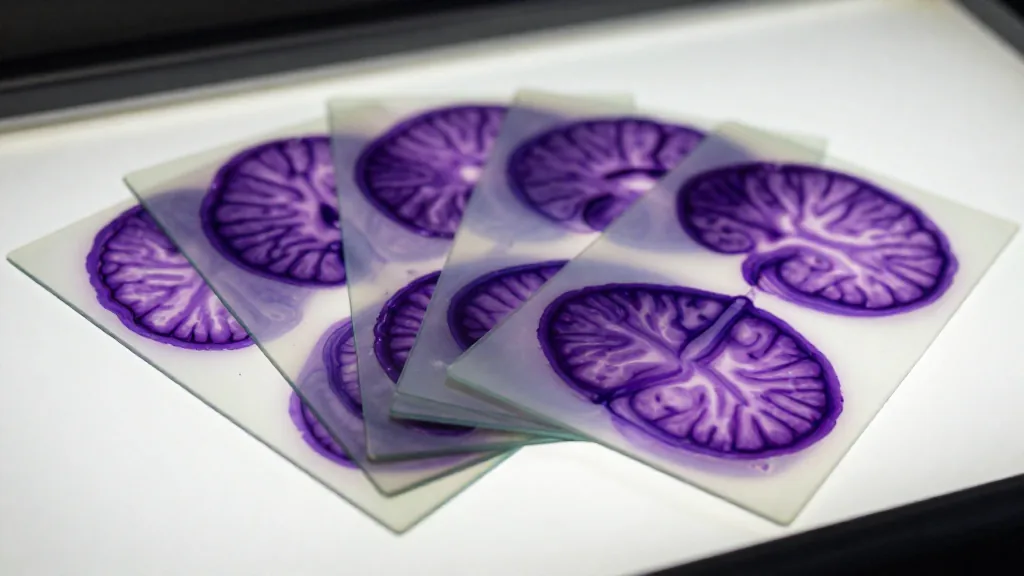
- AI Uses MRIs to Generate Brain Aging Maps for Neurodegenerative Disease Research
An AI-based method uses MRI scans to generate detailed maps highlighting how different areas of the brain age, shedding light on how patterns of brain changes correlate with changes in cognitive function across lifespan.
- Human Longevity Launches $599 Full-DNA Test with AI Health Updates
Human Longevity has launched a full DNA test priced at $599, which includes whole genome sequencing for all 6.4 billion base pairs of an individual's DNA at 30x clinical-grade depth and delivers AI-interpreted results through the HLI app without requiring a clinic visit.
- What's Behind the Sharp Drop in Labor Force Participation?
The U.S. labor force participation rate has fallen sharply in 2026.
- Recombinant sialylated ApoE2 suppresses ApoE4 and strengthens brain metabolism and cognition in ApoE4 mice
Researchers examine whether recombinant human ApoE2 can leverage genetic protection from ApoE4 to strengthen aging brains at risk for Alzheimer's disease.
- Concurrent category-selective neural activity across the ventral occipito-temporal cortex supports a non-hierarchical view of human visual recognition
Visual recognition is a fundamental human brain function, supported by a network of regions in the ventral occipito-temporal cortex (VOTC). This network is thought to be organized hierarchically, with definite processing stages increasing in invariance and time-course from posterior to anterior cortical regions. Here, we provide a stringent test of this view by measuring category-selective neural activity to natural images of faces across the VOTC with electrophysiological intracerebral recordings in a large human sample (N=140; >11,000 recording sites). Face-selective high frequency broadband
- Heritability of movie-evoked brain activity and connectivity
The neural bases of sensory processing are conserved across people but no two individuals experience the same stimulus in exactly the same way. Recent work has established that the idiosyncratic nature of subjective experience is underpinned by individual variability in brain responses to sensory information. However, the fundamental origins of this individual variability have yet to be systematically investigated. Here, we establish a genetic basis for individual differences in sensory processing by quantifying (1) the heritability of high-dimensional brain responses to movies and (2) the extent of connectivity between these responses.
- LFM2.5-2.6B: Deploy Agents Everywhere
The LFM2.5-2.6B model can now run entirely on-device, making it suitable for use in mobile devices and other low-connectivity environments.
- Directed Evolution in Codon Space
Directed evolution is commonly used in protein engineering, where mature molecules are routinely improved through iterative local search of amino acid space. Here, we extend this principle to coding DNA. We developed a language-model-guided framework that iteratively refined industry-optimized coding sequences of clinical-stage therapeutics through synonymous exploration of codon space. Across 24 antibody-based therapeutics, SynCodonLM-guided refinement significantly increased recombinant expression in CHO cells for 18 molecules (75% responder rate), without detectable compromise of product-quality.
- Generation Lab Launches Home SystemAge Test for Sex-Specific Biological Age
Generation Lab launches a home-based SystemAge test focused on sex-specific biological age assessment and lifestyle-linked insights.
- Endogenous opioid system modulates neural activation during emotion regulation
The endogenous opioid system is a promising candidate because -opioid receptor systems act as stress buffers and modulate emotional responses to both rewarding and aversive stimuli.
- Learning to Predict Contact Force Distributions from Vision Leveraging Object Geometry Priors
This research aims to endow robots with the ability to predict smooth force distributions based on vision and object geometry priors, improving their manipulation strategies.
- Merck's $11B anti-TL1A bet delivers 1 win, 1 loss in midphase inflammatory disease trials
Merck's $11B anti-TL1A drug fails to meet primary endpoint but wins another indication.
- RAG-TESTER: Automated End-to-End Testing of Retrieval-Augmented Large Language Models
RAG-TESTER presents an automated end-to-end testing approach for RAG systems, including document generation, test inputs, and expected outputs.
- The Inference Engine Guide for K3 Deployment
Kimi K3 is here: a 2.8T-parameter MoE with a 1M-token context and native vision, running on vLLM from day 0.
- TAK1 Operates at the Primary Cilium in Non-canonical TGFB/BMP Signaling to Control Heart Development
Pathogenic variants in genes encoding non-canonical TGFB signaling components TAK1 (MAP3K7), TAB2, and PKA-Cα (PRKACA) cause rare multisystem disorders. The study shows that TAK1 operates at the primary cilium for non-canonical TGFB/BMP signaling to control heart development.
- Programmable DNA Nanocages Enhance Levodopa Delivery for Neuroprotection in a Zebrafish Model of Parkinson's Disease
DNA nanocages can enhance levodopa delivery to protect the nervous system in a zebrafish model of Parkinson's disease, potentially treating conditions like Parkinsonism.
- v0.32.6-rc0
Ollama has been updated to version 0.32.6-rc0. Changes include simplifying memory usage strategy definitions for collection components and adding support for filter prefixes.
- What’s missing from the White House plan for the future of US science
To realize 'a new golden age for science', the United States needs open borders and proper funding for studies in the social sciences, public health, and humanities — not just research in technology and engineering.
- Three changes can make Europe a powerhouse in bioengineering
To sustain the region’s strong position in life sciences, investment and education in bioengineering are required.