 RealFeedApp beta
Top science & technology news, July 27, 2026
- TokenTown — How Language Models Work in a SimCity-Like World
Launched team unveiled TokenTown, an isometric city where each district represents one stage of a transformer language model. Tokens are passed along roads and processed for the next generation.
- [TechCrunch] Hugging Face breach reignites debate over alignment and control
The hack was the first verifiable case of an AI lab losing control of its own model. Researchers are divided on how to respond.
- Internal perturbation reveals the flexible and adaptive nature of the coordination between decisions and movements
This study pharmacologically slowed behavior in rhesus monkeys to investigate whether changes in arousal can reorganize decision-action coordination, preserving behavioral efficiency.
- The State of Motion: Demographic and representational consequences of motion-based exclusion in fMRI
This study examines the impact of participant head motion on neuroimaging datasets, highlighting how motion-based exclusions may disproportionately affect certain demographic groups. The research is significant for improving data quality in large-scale neuroimaging studies.
- Researchers building computers on brain organoids neglect a major ethical issue
People who provide tissue samples for biomedical research might not be aware that their cells are being used to build biocomputers based on brain organoids.
- Truth is not a direction: A Tarski attack on LLM probes
A diagonal attack for LLM truth probes shows why no probe on a language model’s embedding space can pin down truth. Modern LLMs famously encode input texts as vectors in some embedding space.
- Synthetic Combinatorial Minimisation of Cell Cycle Control in Yeast
This research uses synthetic genomics to relocate key cell cycle genes into a cluster, allowing combinatorial study and revealing two divergent predictive regimes previously unseen.
- [HackerNews AI] Kimi-K3 on HuggingFace
Instructions to use moonshotai/Kimi-K3 with libraries, inference providers, notebooks, and local apps. Follow these links to get started.
- Enigma raises $71M to make controlling a robot as easy as adjusting the volume
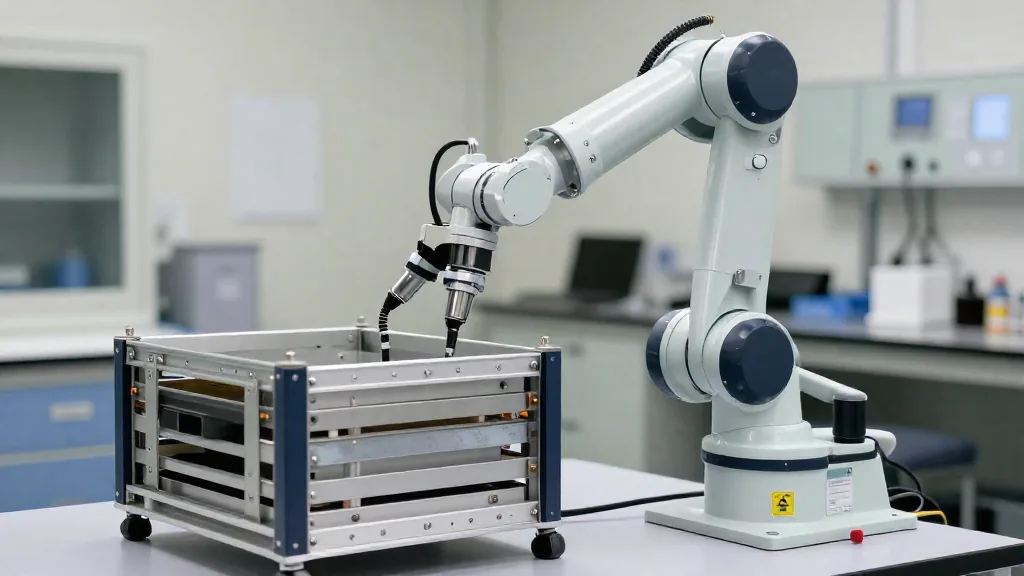
Multiple robotics companies are tackling one of AI’s hardest problems: building foundation models capable of executing tasks they were never explicitly trained to handle. Enigma, a research lab set to emerge from stealth on Monday, is taking a fundamentally different approach by studying how humans engage with robots.
- A generalizable speech neuroprosthesis
Intracortical brain-computer interfaces (BCIs) can restore communication to people with vocal tract paralysis by decoding cortical activity during attempted speech into text. State-of-the-art systems pairing neural-to-phoneme decoders with phoneme-to-word language models have achieved word error rates (WERs) as low as 1%, but only after collecting thousands of sentences of training data. Shortening the data collection process would facilitate scaling this new technology by reducing the time from device implant to high-accuracy communication.
- Genome-wide multi-layered epigenomic profiling across human aging
Aging is characterized by highly reproducible alterations across multiple layers of the epigenetic landscape, including DNA methylation, chromatin accessibility, and histone modifications. However, it remains unclear to what extent these age-associated changes are interconnected and coordinated coherently. To investigate the genome-wide distribution and interplay of age-associated epigenetic alterations, we generated whole-genome bisulfite sequencing (WGBS) data from blood samples of 120 healthy donors. Integration with ATAC-seq data revealed no clear relationship between age-related changes.
- β-cell FMO3-produced TMAO prevents NF-κB-mediated senescence and inflammation in ageing and diabetic conditions
β-Cells produce the metabolite trimethylamine oxide (TMAO), which prevents NF-κB-regulated senescence and inflammation in aging and diabetic conditions. This could have important implications for longevity research.
- Compact Red-Shifted Near-Infrared Fluorescent Proteins Enable Deep-Tissue SWIR Imaging with In Vivo Optical Clearing
Compact near-infrared (NIR) fluorescent proteins (FPs) with red-shifted emission are needed for deep-tissue short-wavelength infrared (SWIR) imaging. We engineered a GAF domain from the JSC1 cyanobacteriochrome of thermophilic Leptolyngbya sp. into three monomeric, biliverdin-binding NIR FPs of 19.1 kDa: miRFP729nano, miRFP732nano and miRFP735nano, with excitation/emission maxima of 714/729, 716/732 and 719/735 nm, respectively. Their off-peak fluorescence beyond 1000 nm was several-fold higher than that of miRFP718nano previously used for SWIR imaging.
- 'Timer' in the brain tracks sleep — and predicts awakening
Scientists have discovered chemical markers on proteins that could serve as a biomarker for sleep deprivation, based on mouse studies. This research helps predict when mice will wake up.
- Self-contained highly-portable Python distributions
The project produces self-contained, highly portable Python distributions. These contain a fully usable, full-featured Python installation: most standard library extensions are present and their dependencies are either included or statically linked.
- Overview: How AI-Cognitive Systems Redefine Radar and Electronic Warfare
Traditional static library radar systems are ineffective against mode-agile threats, which deploy unexpected frequencies, modulation techniques, and hopping schemes. AI/ML cognitive architectures enable adaptive, real-time countermeasures.
- QC-PHAST Search: Classical--Quantum Query Benchmarks for Finite-Pool Rare-Regime Discovery
Rare-regime discovery in parameterized dynamical systems is an active-search problem. We introduce QC-PHAST, a decision protocol and query-accounting framework for finite candidate libraries.
- Electron Shuttling as a Probe for Charge Defects
We show that electron shuttling can be used as a scanning probe to localize defects in silicon spin qubits, which are key components of scalable quantum computing platforms.
- Single-cell Foundation Models Identify Shared and Divergent Transcriptomic Signatures of Aging Across Invertebrates and Mammals
Cross-species aging clocks have so far stayed within mammals. We asked whether a single model can predict age from single cells of fly, worm, mouse, and human, species separated by roughly 800 million years of evolution. We fine-tuned scGPT and Geneformer on 1.3 million such cells, using one parameter set per architecture. Both models classified cells as young, middle, or old, reaching 78.6% and 80.5% accuracy. SHAP attribution then showed where the two architectures agreed and where they diverged.
- [Longevity.Technology] NADclinic and GCLS Partner to Train Doctors in Longevity and Preventive Medicine
NADclinic Group and the Geneva College of Longevity Science (GCLS) have announced a strategic educational collaboration intended to give clinicians across the NADclinic network greater access to structured postgraduate and professional education in longevity, preventive longevity medicine and performance medicine.